Emergency Contacts Abroad: Digital Prep for Your Trips

Reading time: 9 minutes
Picture this: you're lying in a hotel room in Bangkok with food poisoning while your travel companion is out at dinner, and you have no idea which number to call. Moments like that show whether your trip preparation was truly thought through. Your emergency contacts abroad should be saved long before takeoff, not after something goes wrong.
Digital emergency planning is especially essential when you're traveling with a companion you may have only met through a platform. A 2023 study by Germany's Federal Foreign Office found that 37% of help requests from German travelers abroad were processed with delays because emergency contacts were missing. It doesn't have to be that way.
Which Emergency Contacts Belong on Your Digital List
Saving the most important emergency contacts for international trips starts with a clear structure. Your list should cover at least these eight categories, which I'll break down for you now.
First on the list is your country's embassy or consulate in your destination. For U.S. travelers in Thailand, that's the U.S. Embassy in Bangkok at +66 2 205 4000. Keep this number within easy reach, not buried somewhere deep in your email inbox. Embassies and consulates help with lost passports, legal trouble, or in the event of a disaster. Before you leave, also save the State Department's Overseas Citizens Services number: +1 888 407 4747 from the U.S. and Canada, or +1 202 501 4444 from abroad.
Your travel health insurance comes in second. Write down not only the hotline but also your policy number and the claims email address. Allianz Global Assistance, for example, runs a 24/7 emergency line for its policyholders. Many insurers now offer apps with a built-in emergency button.
The local emergency number is often different from the 911 you know at home. In Europe it's 112, in Australia 000, and in Japan 119 for medical emergencies. These numbers need to be available without an internet connection, so save them offline on your smartphone.
Finding Medical Emergency Contacts at Your Destination
Finding medical emergency contacts at your destination should happen during the planning phase. The international network IAMAT (International Association for Medical Assistance to Travellers) lists over 1,500 English-speaking doctors in 90 countries at iamat.org. Membership is free, and you'll get a list of contacts for your destination.
For larger cities, look up the nearest international hospital in advance. In Dubai, for example, that's the American Hospital (+971 4 336 7777), which meets Western standards. For long-haul trips with complex visa preparation, it pays to gather this information alongside your paperwork.
If you take medication regularly, save your primary care doctor's name and phone number along with the active ingredients of your medications in English. The active ingredient metformin is called the same thing worldwide, while brand names vary. That information can be worth its weight in gold at a pharmacy abroad.
Organizing Your Emergency List With Digital Tools
Creating a digital emergency plan for travel works best with the right combination of apps. Since 2021 I've used a three-part strategy that has proven itself: available offline, synced in the cloud, and a physical backup.
The "ICE – In Case of Emergency" app (available for iOS and Android) stores emergency contacts so they're easy to reach, even from the lock screen. You can sort contacts into categories, add medical information, and attach documents as PDFs. The data stays offline on your device, which matters when you're traveling through areas with poor reception.
Alongside that, I recommend Google Docs or Notion for a cloud-based master list. In my Notion template, I have tabs for each destination: embassies, insurance, local hospitals, and credit card hotlines. The advantage is that your travel companion can use the same list when you travel together. Especially on trips where you've made financial arrangements, both of you should have access to important contacts.
Offline Backup: The Underrated Lifesaver
Despite all the digitalization, a physical backup belongs in your luggage. Print your emergency contacts on a single half-letter page and laminate it, which costs about $2 to $3 at any copy shop. That card goes in your wallet, and a second copy goes in your checked luggage.
Why? In October 2023, after the earthquake in Morocco, the mobile network was down for days. Travelers with printed embassy contacts got help much faster than those who had relied on their smartphones alone. The Berliner Zeitung reported this in its October 15, 2023 edition.
In addition, photograph all your important documents (passport, visas, insurance policies, vaccination record) and store them in an encrypted cloud folder such as Tresorit or a password-protected Dropbox. If you lose your documents, you'll at least have digital copies on hand.
Special Precautions for Sugar Dating Trips
Taking safety precautions for international travel takes on an extra dimension when you're traveling with someone you haven't known for long. For arrangements made through sugar dating platforms, an expanded emergency strategy makes sense.
Share a detailed itinerary with a trusted person at home: flight details, hotel name and address, planned excursions. Apps like "TripIt" automatically build these overviews from your booking confirmations. Your trusted person should also have your travel companion's contact details, not out of distrust, but as a safety net.
Agree on fixed check-in times. A daily WhatsApp call at 8 p.m. local time costs nothing but gives your loved ones at home peace of mind. If a check-in doesn't happen, they know something is wrong and can activate the right emergency contacts.
For active vacations like diving or extreme sports, also tell the local dive shop or tour operator about your emergency contacts. The Dive Operators Safety Association recommends naming a "surface contact" for every dive: someone on shore who knows when you're due back.
Credit Cards and Financial Emergency Contacts
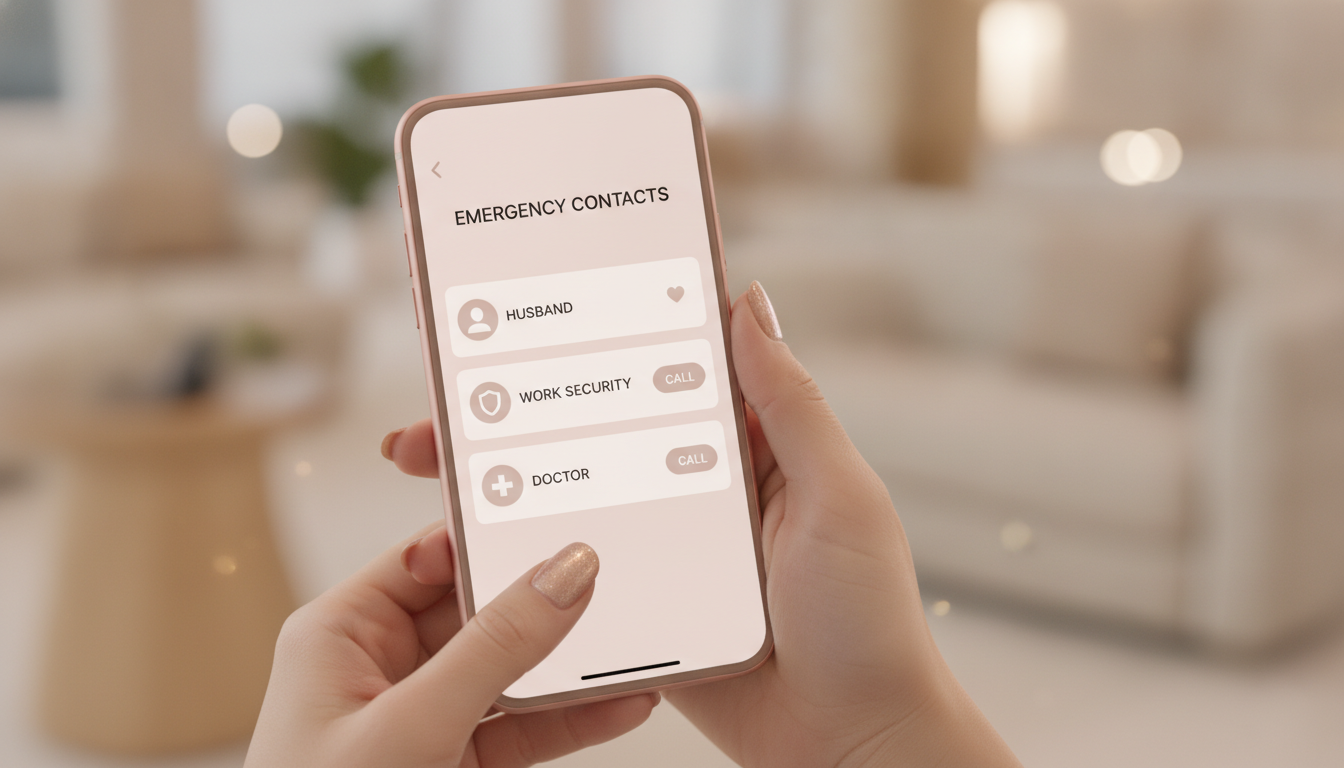
An often overlooked aspect of travel safety is financial emergencies. A lost card or fraud can bring your trip to a standstill if you don't have the hotline numbers handy.
Save the international collect-call number printed on the back of each of your credit and debit cards, and keep it somewhere other than your wallet. Write down your bank's international hotline as well, and note your card number (the last four digits are enough for identification). Major issuers also let you freeze a lost card instantly in their mobile app.
For emergency money transfers, services like Western Union or MoneyGram are options. If your parents or friends need to send you money in an emergency, it can arrive within hours. The fees are high, around 10% on $1,000, but in real need they're worth every penny.
Here's a smart precaution: file a travel notice with your bank. Many banks offer this online. You enter your travel dates and countries so that legitimate transactions aren't blocked as fraud. You'll often get the latest emergency numbers from them at the same time.
Vacation Crisis Management: The Emergency Plan for the Worst Case
Organizing an emergency plan for shared trips also means playing through scenarios. What happens if one of you has to go to the hospital? Who takes on which tasks?
Create an "if-then list" together: if there's a medical emergency, Person A calls the insurance company while Person B informs the hotel. If a passport is lost, Person A goes to the police to file a loss report while Person B contacts the embassy for an emergency travel document. It sounds bureaucratic, but it saves an enormous amount of time under stress.
Important during international crises: enroll in the State Department's Smart Traveler Enrollment Program (STEP) at step.state.gov. It sends security alerts for your destination and lets the nearest embassy reach you in an emergency. Germany's "Sicher Reisen" app from the Federal Foreign Office works similarly for German travelers: after the 2020 terror attack in Vienna, the warning reached registered users within 12 minutes. STEP enrollment is free and takes about three minutes online.
Medical Emergencies: Communicating Without Language Skills
Even if you know the emergency numbers, how do you communicate without the local language? The "Google Translate" app works offline if you download the language packs in advance. Download at least English and the local language before you board the plane.
For medical emergencies, there are specialized apps like "Universal Doctor Speaker," which has medical phrases ready in 17 languages. "I have severe chest pain" or "I'm allergic to penicillin" come preformulated and are available at the touch of a button, even offline. The cost is a one-time fee of about $5.
You should also make a small emergency card with your blood type, known allergies, and chronic conditions in English and the local language. Websites like allergytranslation.com generate such cards for free that you can print out.
Key Emergency Contacts by Region
The relevant contacts vary considerably depending on your destination. Here's an overview of the most important numbers for popular destinations:
- Thailand: Tourist police 1155 (English-speaking), ambulance 1669, U.S. Embassy Bangkok +66 2 205 4000
- USA: Single emergency number 911, German Consulate General New York +1 212 610 9700 (for German travelers), CDC health hotline +1 800 232 4636
- Morocco: Police 19, ambulance 15, U.S. Embassy Rabat +212 537 637 200, private ambulance SOS Médecins +212 522 98 98 98
- Australia: Emergency number 000, U.S. Embassy Canberra +61 2 6214 5600
- Dubai/UAE: Police 999, ambulance 998, U.S. Embassy Abu Dhabi +971 2 414 2200
You should add these numbers to your contacts before you leave. Label them clearly, such as "Emergency Thailand" or "Embassy Morocco," so you don't have to search long when you're stressed.
Updating Your Emergency List Regularly

Emergency contacts abroad aren't a one-time task. Embassies change numbers, insurers switch, you move and have a new primary care practice. Set an annual reminder (around New Year's, say) to check all your contacts.
While you're at it, check the validity of your ID documents too. A passport that expires in six months can already cause problems with a visa. Many countries require at least six months of remaining validity beyond your return date.
Also update your emergency contacts immediately after every insurance change. If you switch to a new travel health insurance in March, the old numbers should be gone from your list by April. Otherwise, in an emergency you'll call the wrong company and lose valuable time.
Frequently Asked Questions About Emergency Contacts Abroad
Which emergency contacts are essential for international trips?
The essentials are your country's embassy or consulate at your destination, your travel health insurance (with policy number), the local emergency number, credit card hotline numbers, and at least one trusted person at home. In addition, people with chronic conditions should list their specialists, and on sugar dating trips you should name a second emergency contact.
What's the best way to save emergency contacts on my smartphone?
Use a combination: the phone app for quick access, a dedicated emergency app like ICE for structured information on your lock screen, and a cloud solution like Google Docs for syncing with your travel companion. Download offline maps and language packs in advance so you can stay in control even without internet.
What belongs in a digital emergency plan for shared trips?
A complete plan includes all emergency contacts for both travelers, copies of important documents (passports, visas, insurance), medical information (blood type, allergies, medications), the contact details of a trusted person at home, hotel and flight details, and an "if-then list" assigning tasks in a crisis.
Should I register my trip with my government before I travel?
Yes, especially for trips to high-risk areas or longer stays. For U.S. citizens, the State Department's Smart Traveler Enrollment Program (STEP) lets the embassy reach you quickly in a disaster or crisis and help with evacuation. Enrollment is free and takes only a few minutes at step.state.gov.
How do I find English-speaking doctors abroad?
The International Association for Medical Assistance to Travellers (IAMAT) offers a free database of over 1,500 English-speaking doctors in 90 countries at iamat.org. Alternatively, contact your embassy, which often keeps lists of trustworthy, multilingual physicians. Your travel health insurance can also often arrange suitable contacts.
Conclusion: Safety Starts Before the Trip
Digital emergency planning for safe travel isn't paranoia, it's smart preparation. The 20 minutes you invest now to organize your emergency contacts abroad can make the difference between hours of waiting or hundreds of dollars in extra costs when it matters.
Whether you're traveling alone or with a travel companion, a structured emergency list belongs in your luggage just like your passport. Especially on shared trips arranged through platforms, where you may have only known each other for a short time, a joint emergency plan creates not just safety but trust.
Start today: open your notes app, create a new list, and enter the first number, the embassy for your next destination. In ten minutes you'll have the foundation to build on. Your future self will thank you if the day never comes when you actually need these numbers.
And while you're planning your next trip, don't forget to sort out the other practical aspects too. Thorough preparation makes the difference between stress and relaxation, whether it's emergency contacts, budget planning, or the right travel companion.