Splitting Vacation Costs: Fair Agreements for Shared Trips

Reading time: 12 minutes
Picture this: you're sitting with your travel companion at your first dinner together on the beach, the mood is perfect, until the check arrives. Who pays? Do you split it? Silence, awkward glances, undercurrents of tension. Situations like this arise exactly when splitting vacation costs hasn't been settled in advance. Yet financial misunderstandings can be avoided completely with transparent agreements.
Especially in the context of Sugar Dating and shared trips with new travel partners, clarity about the travel budget is crucial. A 2023 study by the German Travel Association shows that 67 percent of all travel disputes stem from unresolved financial questions. The good news: with the right strategies, money becomes the most relaxed topic of your trip.
Why Clear Financial Agreements Before Booking Are Essential
Before you book even a single hotel, you need an honest conversation about financial expectations. In Sugar Dating, people often have different ideas about who covers which expenses. While some assume the Sugar Daddy pays for everything, others prefer more modern models with shared contributions.
The reality: according to a 2022 SeekingArrangement survey, 43 percent of sugar arrangements include transparent cost agreements before traveling together. Without that clarity, you risk not only financial surprises but also the premature end of a promising connection. If you're just getting started finding the right travel partners, you should bring up financial expectations in your very first conversations.
How to Have the First Conversation About Money
Timing is everything. Bring up the topic of the travel budget between the second and third date, when you already like each other but no false expectations have set in yet. Be specific: "For Barcelona I'm budgeting about $1,300 for five days. How do you picture us splitting it?" That directness comes across as professional and prevents misunderstandings.
Avoid vague statements like "We'll figure it out somehow." According to an analysis by the finance platform Splitwise, unclear agreements lead to disagreements during the trip in 78 percent of cases. Especially on international trips with different currencies, ambiguity multiplies quickly.
Different Models for Splitting Costs on a Shared Vacation
There is no single right model for every travel situation. Travel budget planning depends on your relationship dynamic, your income gap and your individual values. Here are the most common models with their pros and cons:
The Classic Sponsor Model
In a traditional Sugar Dating arrangement, the financially stronger partner covers all travel costs. This model works well when both sides have explicitly agreed on this dynamic. The sponsor books flights, hotel and restaurants, while the companion contributes their time and company. Important: even here you should define boundaries. Does the sponsor also cover shopping or personal extras like spa treatments?
A 2023 survey by MySugarDaddy found that 62 percent of successful sugar relationships use the sponsor model with clearly defined extras. Transparency creates security for both sides here.
Percentage Split by Income
Modern couples increasingly prefer a fair split based on the income ratio. If Person A earns twice as much as Person B, A covers two thirds of the costs and B one third. For many, this model feels fairer than a strict 50/50 split.
Since 2022, the Splitwise app has offered a percentage split feature that handles exactly this scenario. You simply enter your income ratio, and the app automatically calculates each share for every expense. On longer trips with lots of individual expenses, that saves an enormous amount of time.
The Category Method
A pragmatic approach divides expenses by category. Person A covers lodging and flights, for example, and Person B covers food and activities. This method works well when the total costs are roughly balanced. It avoids constantly splitting individual bills and gives both partners clear areas of responsibility.
According to the travel blog Nomadic Matt, 34 percent of couples on long-term trips use this method successfully. The key is to research the approximate costs per category beforehand so that neither side ends up paying significantly more.
Which Expenses Should Be Split Fairly in Sugar Dating
Even in classic Sugar Dating there are gray areas. Small personal extras like a cocktail at the hotel bar or a spontaneous souvenir often fall into an area where expectations can diverge. Clear categorization helps:
- Shared basic costs: flight, hotel, rental car, shared meals – the agreed main arrangement applies here
- Personal extras: individual shopping trips, separate spa visits, personal snacks – everyone pays for themselves unless agreed otherwise
- Spontaneous shared activities: sunset cruise, a show – it's best to clarify beforehand or take turns
- Tips and service charges: often overlooked, but relevant on luxury trips – decide who is responsible in advance
- Health costs and emergencies: everyone should have their own travel insurance, but settle spontaneous pharmacy purchases together
The Invisible Cost Factor: Time and Organization
An often overlooked aspect of splitting vacation costs is the value of planning and organization. If one person invests ten hours in research, bookings and trip planning, that should be recognized. Some couples agree that the organizer pays a smaller share of the travel costs, or that both split the planning work.
The platform TripIt found in 2023 that an average of 14 hours of planning goes into a one-week vacation. That work has a value that should be taken into account in fair arrangements.
Using Modern Apps for Transparent Expense Tracking
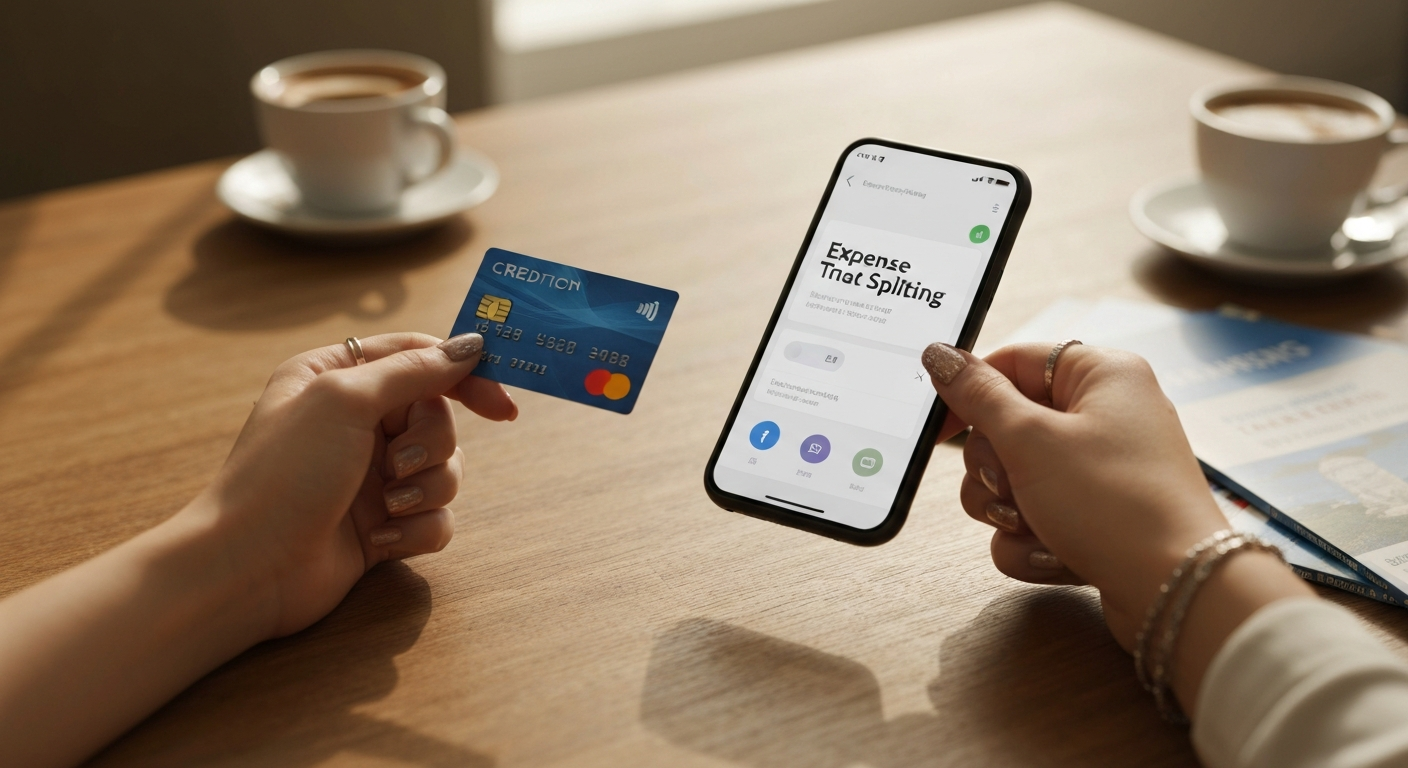
Technology makes splitting vacation costs easier than ever. Instead of handwritten lists or complicated spreadsheets, apps do the work automatically. Here are three proven tools:
Splitwise: The Classic for Shared Expenses
Splitwise has been the gold standard for shared travel expenses since 2011. You simply photograph receipts, the app reads the amount using OCR technology and assigns it to the right person. At the end of the trip, Splitwise shows you down to the cent who owes whom how much. The app supports over 150 currencies and converts automatically, which is perfect for international trips.
With over 10 million users worldwide, Splitwise has proven reliable. The premium version at $2.99 per month offers currency conversion with no markup and unlimited receipts, which makes sense on longer trips with many transactions.
Tricount: Made for Group Trips
If you're traveling not as a pair but with several people, Tricount is the better choice. The app can manage complex group expenses with different levels of participation. If five people eat together, for example, but two don't drink wine, Tricount can break that down exactly. The interface is intuitive and also works offline, which matters in regions with poor internet.
Revolut: Banking App with Built-In Group Vaults
Revolut goes one step further and combines banking with cost splitting. You and your travel companion each put money into a shared "Group Vault" before the trip, which you can both spend from. That eliminates the problem of someone fronting the money at the end. Revolut also offers real exchange rates with no markup for over 30 currencies, and on trips abroad you often save 3-5 percent compared to traditional credit cards.
According to a TechCrunch report, 2.5 million couples already use the Group Vault feature for shared expenses. Opening an account is free, and premium features start at $8.99 per month.
The Shared Travel Fund: Practical or Problematic?
The concept of a shared fund sounds simple: at the start of the trip, both people pay in an agreed amount, from which all expenses are then covered. In practice, though, this model has pitfalls. What happens to leftover money? How do you handle different spending habits when one of you is thrifty and the other generous?
A 2023 survey by the German finance portal Finanztip shows that shared travel funds lead to conflicts in 41 percent of cases when no clear rules exist. Successful shared funds only work with these basic rules:
Fixed Contribution and Transparent Use
Both partners pay in the same or a proportional amount, which is used for defined categories. Everything beyond that, each person pays themselves. An example: $900 per person for hotel, transportation and shared meals. Individual drinks, shopping and extras come out of your own account.
A physical travel fund in the form of a shared wallet works well in cash-based countries. In Scandinavia or the UK, where almost everything is paid by card, digital solutions like Revolut's Group Vault are more practical.
How to Clarify Financial Expectations Before the Trip
The conversation about money feels uncomfortable, but it doesn't have to. With the right strategy, it becomes a matter-of-fact planning item like the destination and dates. Start with your own financial reality: "My budget for the week is $1,600 at most. How about you?"
This openness invites the other person to be honest too. If you've found a travel partner through a platform, clear financial ground rules are part of the getting-to-know-you phase anyway. Use that structure to your advantage.
Making the Budget Planning Concrete
Put together a rough calculation with concrete numbers. An example for one week in Cancun:
Flights: $350 per person when booked three months ahead. Hotel: $1,050 for a double room for seven nights, so $525 per person. Rental car: $300 split, making $150 per person. Food: an estimated $65 per day per person, so $455. Activities and admissions: a budget of $220 per person. Total budget: about $1,700 per person for one week.
With concrete numbers like these, the abstract "How do we split this?" becomes a measurable plan. You can then discuss specifically whether Person A might take flights and hotel ($875) while Person B covers the rental car, food and activities ($825), with an equalizing payment of $25 for the difference.
Factoring In an Emergency Budget and Unexpected Costs
Even the best travel budget planning can't cover every eventuality. A missed flight, medical emergencies or spontaneous opportunities require financial wiggle room. Reputable travel experts recommend a buffer of 20 percent on top of the planned budget.
In your Cancun example, that would be an additional $340 per person as a reserve. The question: who bears these unplanned extra costs? Ideally, you've already agreed in advance that such expenses are split by the same formula as the main costs. If one of you has a much higher income, it can also make sense to agree that this person fronts emergency costs and later claims back only part of them or none at all.
Insurance as an Investment in Financial Security
Trip cancellation insurance costs about $65-85 on a $1,600 trip but can save 100 percent of the costs if you have to cancel. Travel medical insurance for one week costs about $16 and potentially covers treatment costs in the five-figure range. Each person should take out both policies for themselves so that you're independent in a real emergency.
The German comparison portal Check24 found in 2023 that 68 percent of German travelers skip travel medical insurance, a risky gamble that can blow the entire travel budget in an emergency. Agree that everyone takes out their own insurance before you book.
Respecting Cultural Differences in Financial Matters

In some cultures it is considered impolite to split costs meticulously, while in others precision is expected. If you're traveling with someone from a different cultural background, these differing expectations can lead to misunderstandings. In Southern European countries, for example, it is more common for one person to pay the whole bill one time and the other the next, instead of splitting every time.
If your travel companion comes from a country with a different money culture, bring it up directly: "How do you usually handle this back home?" That question shows respect and opens a dialogue about expectations. In international Sugar Dating arrangements, these cultural nuances can be especially relevant.
What to Do When Cost Splitting Goes Wrong
Despite the best planning, it can happen: in the middle of the vacation you realize the expenses are unevenly distributed or someone feels uncomfortable with the agreement. Instead of letting the tension build, bring it up promptly. A calm conversation in the evening: "I noticed you've paid for the last three dinners. That doesn't feel right to me. Let's handle the next ones differently."
According to a 2022 study by psychologist Dr. Emily Nagoski, addressing financial disagreements within 24 hours leads to constructive solutions in 84 percent of cases. If you wait until after the trip, that rate drops to 23 percent, because the resentment has already set in.
Making Retroactive Corrections Fair
If there is a clear imbalance in expenses after the trip, use apps like Splitwise for a retroactive analysis. The app shows exactly who spent how much. Instead of paying back each transaction individually, Splitwise calculates the net amount: if Person A spent $200 more in total than agreed, Person B pays back that $200 in one payment. Simple, clear, no drama.
Set a deadline for this settlement payment, ideally within two weeks after the trip ends, while memories are fresh and willingness to pay is high.
FAQ: Common Questions About Splitting Costs on Vacation
How do you split costs fairly on a shared vacation when incomes are very different?
Splitting by percentage based on the income ratio is considered the fairest method. If Person A earns twice as much as Person B, A covers two thirds of the costs. Apps like Splitwise offer automatic calculation features for this. What matters is that both partners feel comfortable with the split and see it as fair.
In Sugar Dating, should the Sugar Daddy always cover all travel costs?
That depends on your individual agreement. While traditional arrangements often involve full cost coverage, modern sugar relationships increasingly prefer hybrid models. The Sugar Daddy covers main costs like flights and hotel, for example, while the companion pays for smaller expenses or personal extras. What matters is transparent communication before booking.
Which app is best for splitting costs when traveling?
For couples, Splitwise is recommended because of its easy use and automatic receipt capture. For group trips, Tricount is superior. Revolut's Group Vault works ideally if you prefer a shared upfront fund. All three apps are free in their basic versions and support multiple currencies.
How do you bring up financial expectations without ruining the mood?
Timing and wording are decisive. Bring up the topic matter-of-factly between the second and third date: "So we can both plan with peace of mind, how do you picture us splitting costs for our trip?" This question signals professionalism rather than distrust. Most people appreciate this clarity and feel more secure because of it.
What should you do if your travel partner doesn't stick to agreements?
Address deviations promptly and directly, ideally while you're still on the trip. Phrase it from your own perspective: "I notice we're deviating from our agreement. Can we clarify that again?" If the problem continues, that's a serious signal about this person's reliability. Consider whether you want to plan future trips with someone who doesn't respect agreed arrangements.
Conclusion: Financial Clarity Makes Travel More Relaxed
Splitting vacation costs doesn't have to be a point of contention. With transparent agreements before booking, clear arrangements for expense categories and the right digital tools, money becomes the most relaxed aspect of your shared trip. Whether you choose the classic sponsor model, a percentage split or a shared fund, what matters is that both partners feel comfortable with the solution and see it as fair.
Invest the time for a thorough money conversation before you spend the first dollar. Those 30 minutes of planning will spare you potential conflicts throughout the entire trip. Use modern apps like Splitwise or Revolut to keep the administrative effort to a minimum. And remember: financial transparency is not a sign of distrust but of respect and professionalism.
If you're still looking for the right travel companion, start with clear financial expectations. Reputable platforms let you find travel companions with similar ideas about cost splitting. That way you start your adventure not only with shared travel plans but also with financial clarity. Book your next trip with the good feeling that the money side is settled, and enjoy the journey without financial surprises.