Accessible Cruises: Traveling Safely at Sea
Reading time: 11 minutes
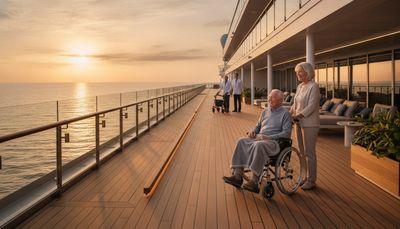
A cruise is a dream for many people, but if you travel with a wheelchair or a walker, you may wonder: are accessible cruises really relaxing and safe? The good news is that modern cruise lines such as AIDA Cruises, TUI Cruises and Royal Caribbean have invested heavily in wheelchair-accessible ships in recent years. According to a 2022 study by the German Travel Association, more than 60 percent of newly built cruise ships now come with accessible cabins. What matters, though, is that you do your homework in advance and find the right travel companion.
If you don't want to travel alone or need extra support, you can find a companion for your cruise through specialized platforms. That gives you peace of mind and makes life on board much more comfortable.
Which Cruise Lines Offer Accessible Cruises
Not every cruise line is equally well prepared. AIDA Cruises offers wheelchair-accessible cabins on all 14 ships in its fleet, with wide doors, roll-in showers and grab bars. The AIDAnova, in service since November 2018, has 28 accessible cabins. TUI Cruises set up 22 special cabins for guests with disabilities on the Mein Schiff 7, which made its maiden voyage in June 2024.
Royal Caribbean makes accessibility a priority with the Icon of the Seas: the largest cruise ship in the world, which entered service in January 2024, offers 47 wheelchair-accessible cabins and step-free access to all public areas. MSC Cruises also has 36 accessible cabins on the MSC World Europa. Cunard Line goes a step further and offers a special concierge service for guests with reduced mobility on the Queen Mary 2.
When you book, be sure to ask explicitly for accessible cabins. They are often in limited supply and should be reserved at least six months in advance. Most cruise lines publish detailed deck plans on their websites that mark the wheelchair-accessible cabins.
Accessible Cabins: Features and Important Details
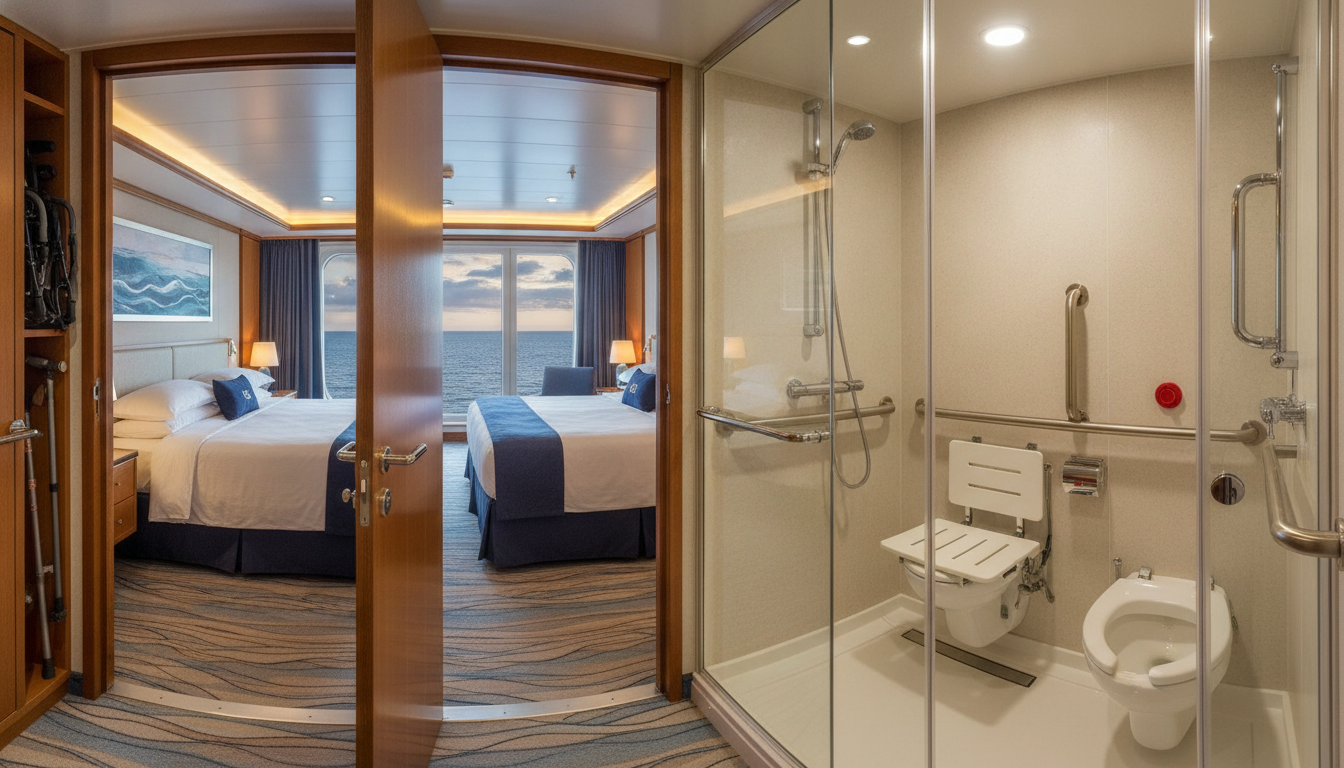
Accessible cabins differ from standard cabins in several ways. The door is at least 32 inches (80 centimeters) wide so you can get through easily in a wheelchair. The maneuvering space inside the cabin is much larger, usually at least 5 x 5 feet (150 x 150 centimeters). The bathroom has a roll-in shower with non-slip tiles and grab bars on the wall and in the shower stall.
On AIDA ships, the sinks have knee clearance, and the toilets are raised and fitted with fold-down support rails. All light switches, outlets and closets are within easy reach. An emergency call button in the bathroom adds extra safety. Royal Caribbean also equips its accessible cabins with visual alarms for guests who are hard of hearing.
The MSC World Europa has special balconies with a lowered railing so that wheelchair users can enjoy the ocean view too. The beds are height-adjustable, and there is enough room to store medical equipment. Some premium cruise lines, such as Seabourn, even provide mobile patient lifts on request.
Technical Aids On Board
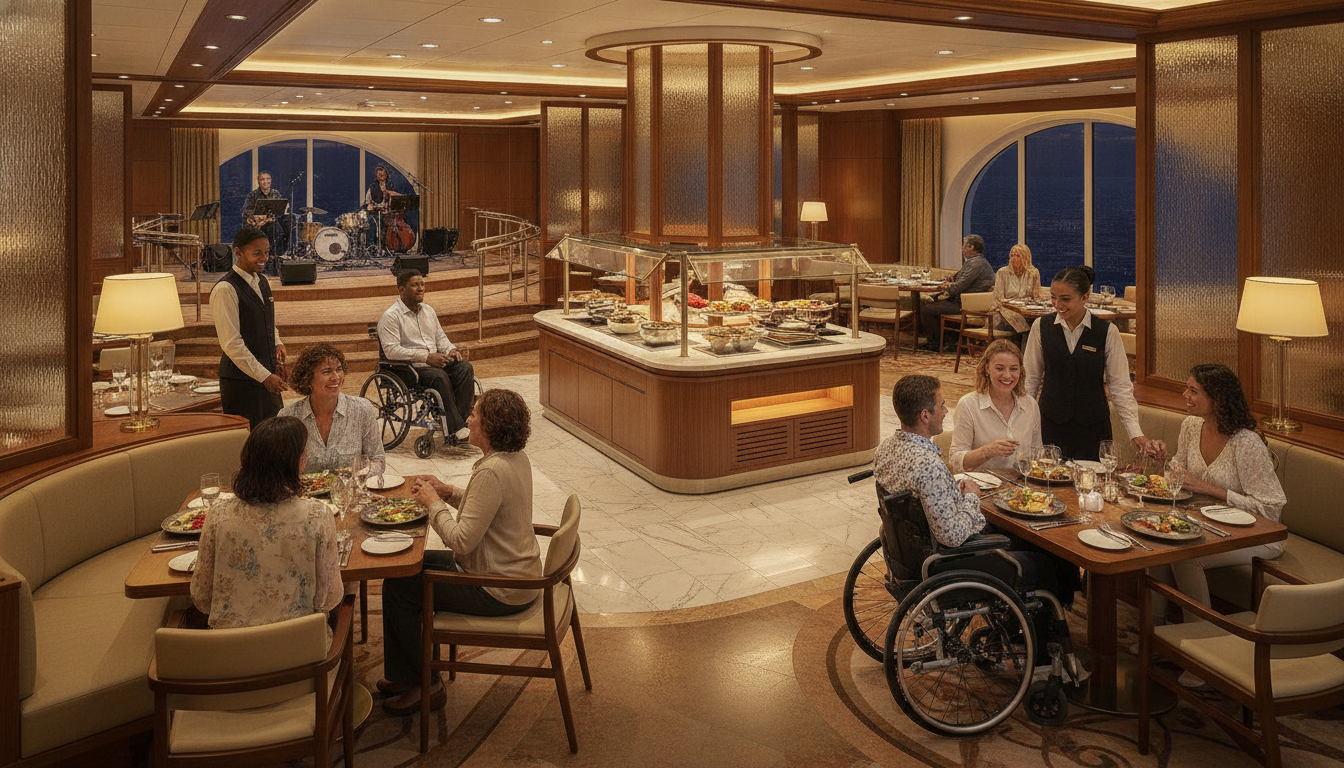
Most modern cruise ships have elevators serving every area. On the AIDAprima and AIDAperla, AIDA Cruises installed elevators with voice announcements. Stairways have continuous handrails on both sides. Public areas such as restaurants, theaters and pools can be reached by ramp or elevator.
Royal Caribbean offers pool lifts on request to make getting into the water easier. MSC Cruises provides wheelchairs free of charge for use on board, but you should bring your own since the number is limited. Some ships also have special beach wheelchairs for shore excursions.
Planning and Organizing Accessible Shore Excursions
The biggest challenge on cruises with a disability is often the shore excursions. Not every port has accessible docks. In some destinations, guests have to be brought ashore by tender boat, which can be difficult for wheelchair users. AIDA Cruises marks all wheelchair-accessible tours in its excursion programs with a special symbol.
TUI Cruises works with local providers who supply specially equipped buses with ramps or lifts. In Barcelona, Rome and Lisbon, the cruise line has exclusive contracts with transport companies that specialize in accessible travel. With Royal Caribbean, you can book accessible shore excursions up to 48 hours before the ship arrives in port.
Many ports in Northern Europe, such as Hamburg, Copenhagen and Stockholm, are exemplary when it comes to accessibility. In southern destinations like Santorini or Dubrovnik, the infrastructure is often more difficult. In those places, it makes sense to book private tours with specialized providers. Organizing accessible shore excursions on a cruise takes careful planning and good research.
Tips for Accessible Shore Excursions
Find out about the conditions in each port ahead of time. The website Kreuzfahrt-Praxis offers detailed port information with accessibility ratings. Notify the cruise line of your support needs no later than two weeks before departure. Book shore excursions labeled "Wheelchair Accessible."
Pack important medications and aids in your carry-on luggage. Digital preparedness with emergency contacts abroad is especially important if you depend on medical support. Download helpful apps such as "Wheelmap," which shows accessible places around the world.
Booking a Cruise with a Wheelchair: Practical Tips
Booking a cruise with a disability takes more lead time than a standard trip. The best approach is to contact the cruise line directly or a specialized tour operator. Companies like RollstuhlReisen.de or Barrierefrei-Unterwegs.de in Germany have specialized in this audience and know the details of the different ships.
When you book, you will need to provide the following information: the type and extent of your mobility impairment, the aids you need such as a wheelchair or rollator, any medical requirements, and whether you are bringing a companion. Many cruise lines give the companion a discount or even free passage if you can show that you need support.
Trip cancellation insurance should also cover pre-existing conditions. Providers such as HanseMerkur or Allianz offer special rates for travelers with disabilities. Get written confirmation that your booked cabin is accessible, and find out whether a wheelchair is available on board.
Finding a Cruise Companion for Seniors
Many seniors and people with disabilities don't want to give up on cruising but need support. A companion can help with everyday tasks, go on shore excursions with you and provide a sense of security. Through specialized platforms, you can find a travel companion for seniors who has cruise experience.
When choosing someone, look for references, experience with accessible travel and good chemistry. Many professional travel companions offer their services through agencies or online platforms. In Germany, the Paritätischer Wohlfahrtsverband (a welfare association) connects people with disabilities with volunteer and professional travel companions.
Professional travel companions cost between $90 and $165 per day, plus travel expenses. In Germany, some long-term care insurers cover part of the cost if there is a medical need. Check with your insurer ahead of time. Ideally, your companion should have first-aid training and be familiar with the particulars of cruising.
Legal Aspects and Support
In Germany, people with a severe disability card (a degree of disability of 50 or higher) can get discounts from many cruise lines. AIDA, for example, grants a 10 percent discount on the trip price. A companion traveling with someone whose card carries the "B" marker sails free with some providers.
Under EU Regulation 1177/2010, people with reduced mobility are entitled to free assistance when boarding and disembarking. Cruise lines are required to provide this help if you request it at least 48 hours before departure. If you run into problems, you can contact the Schlichtungsstelle für den öffentlichen Personenverkehr (SÖP), the German public transport conciliation body.
Medical Care On Board
All larger cruise ships have an onboard hospital with trained doctors. The medical center on the AIDAnova is staffed around the clock and equipped with modern diagnostics. On the larger Royal Caribbean ships, there are even surgeons on board. Medical care meets European standards.
Bring enough medication for the entire trip, plus a five-day reserve. A multilingual medication schedule and a doctor's note in English are helpful. Tell the ship's doctor about any chronic conditions and special medical needs when you board. Treatment costs on board have to be paid out of pocket, so travel health insurance for trips abroad is essential.
There are specialized cruises for dialysis patients. FMC Travel Care offers a mobile dialysis center on board on selected AIDA voyages. Treatments take place by arrangement, and specially trained staff are on site. TUI Cruises offers similar services on its Mein Schiff fleet.
Traveler Experiences and Practical Tips
On the platform Kreuzfahrten.de, numerous travelers with disabilities share their experiences. Helen M. from Chicago sailed on the AIDAbella with her daughter in May 2023 and writes: "The cabin was perfectly equipped, and the staff helped us at every turn. The accessible shore excursions in Norway were especially impressive."
Thomas K., a wheelchair user from Boston, recommends careful preparation in his blog: "I booked all my shore excursions two months in advance and told the cruise line exactly what I needed. That way everything went smoothly." He also advises bringing your own spare parts for your wheelchair, since getting them on the ship can be difficult.
Fair cost sharing on vacation is also an issue on cruises with a companion. Clarify ahead of time whether your companion only covers their own costs or whether certain items, such as shore excursions, are shared.
Accessible Cruises in Different Regions
Mediterranean cruises are especially popular with seniors and people with disabilities. The ports in Barcelona, Marseille and Civitavecchia (Rome) are well equipped. Northern Europe routes to Norway, Iceland or the Baltic offer spectacular scenery and modern infrastructure. The Norwegian fjords are in some cases easy to explore even in a wheelchair.
Caribbean cruises are more demanding. Many smaller islands have no accessible port facilities. On its private islands such as CocoCay, Royal Caribbean has built accessible beaches with special wheelchairs. River cruises are also becoming more accessible. Nicko Cruises offers wheelchair-accessible cabins and ramps for going ashore on the MS Rhein Melodie.
On world cruises lasting several months, the selection of accessible cabins is limited. Cunard Line and Holland America Line, however, each offer more than 30 accessible cabins on their world cruise ships, the Queen Mary 2 and the MS Volendam. You should book at least a year in advance.
Frequently Asked Questions About Accessible Cruises
How much does an accessible cruise cost
Accessible cabins generally cost no more than comparable standard cabins. A one-week Mediterranean cruise with AIDA starts at around $870 per person in a wheelchair-accessible inside cabin. Balcony cabins start at roughly $1,300. Extra costs can come up for the companion, special shore excursions and medical services on board. Some cruise lines give people with a severe disability card discounts between 5 and 15 percent.
What documents do I need to book
You will need a valid passport or national ID card, depending on your destination. For a cruise with a disability, a doctor's note confirming that you are fit to travel is a good idea. Make a copy of your disability card. If you depend on specific medications, bring multilingual prescriptions and medication schedules. Your companion may need a power of attorney if they have to make decisions for you in an emergency.
Can I bring my own electric wheelchair
Yes, electric wheelchairs can be brought along without any problem. Report them when you book, since they have to be stowed specially. The batteries should comply with IATA regulations. Lithium-ion batteries are generally allowed but must be declared. There are charging options in the cabin on board. Transfers by tender boat can be difficult, and in that case cruise lines often provide onboard wheelchairs.
Are cruise ships suitable for blind and visually impaired travelers
Yes, many modern ships offer support for visually impaired guests. There are tactile guidance systems, Braille labels in elevators and accessible cabins with special markings. AIDA and Royal Caribbean offer audio guides for shore excursions on request. Service dogs are welcome on all major cruise lines but must be registered in advance. The crew is trained to help visually impaired guests find their way around.
What happens in a medical emergency at sea
All large cruise ships have an onboard hospital with doctors and nurses. In serious emergencies, a helicopter transfer to the nearest mainland can be arranged. The cost is usually covered by travel health insurance. It is important that you declare all pre-existing conditions before the trip and take out comprehensive travel medical insurance that includes medical repatriation. Allianz and HanseMerkur offer special rates for cruises.
Checklist for Your Accessible Cruise
- Book an accessible cabin at least six months in advance and get written confirmation
- Report your mobility needs to the cruise line in detail, including aids and medical requirements
- Take out travel health insurance that covers pre-existing conditions and medical repatriation
- Bring medication for the entire trip plus a reserve, and prepare a multilingual medication schedule
- Book accessible shore excursions early and research port information and local conditions
- Arrange a companion if needed, and clearly settle the terms and how costs are shared
- Save emergency contacts digitally and on paper, and bring copies of important documents
- Register your own wheelchair or aids in good time, and pack spare parts and chargers
Conclusion: Accessible Cruises Are a Real Option
Accessible cruises have come a long way in recent years. Modern ships offer well-thought-out solutions for people with disabilities, from wheelchair-accessible cabins to accessible shore excursions. The most important factors for a successful trip are careful planning, booking early and choosing the right cruise line. AIDA Cruises, Royal Caribbean and TUI Cruises are among the pioneers when it comes to accessibility.
If you need support, consider traveling with a companion. It gives you peace of mind and also makes the trip more social and relaxed. Good preparation pays off: accessible cruises make unforgettable experiences at sea possible without giving up comfort and safety. Learn about the different options, ask the cruise lines specific questions and plan your dream trip knowing you will be well looked after. The world's oceans are open to you too!